
1. The client
GrowOrganicBaby.com, an organic baby formula store on Shopify, competing in one of the most trust-sensitive niches in ecommerce. Parents researching formula read labels, compare ingredients, and buy from stores they trust.
In a niche like this, Google's bar for quality is high, and shortcuts get punished.
2. The assignment, and what the audit found instead
The brief was simple: build backlinks. But building links to a site with unresolved foundational problems is pouring water into a leaking bucket, the links underperform, and the underlying issues keep dragging rankings down.
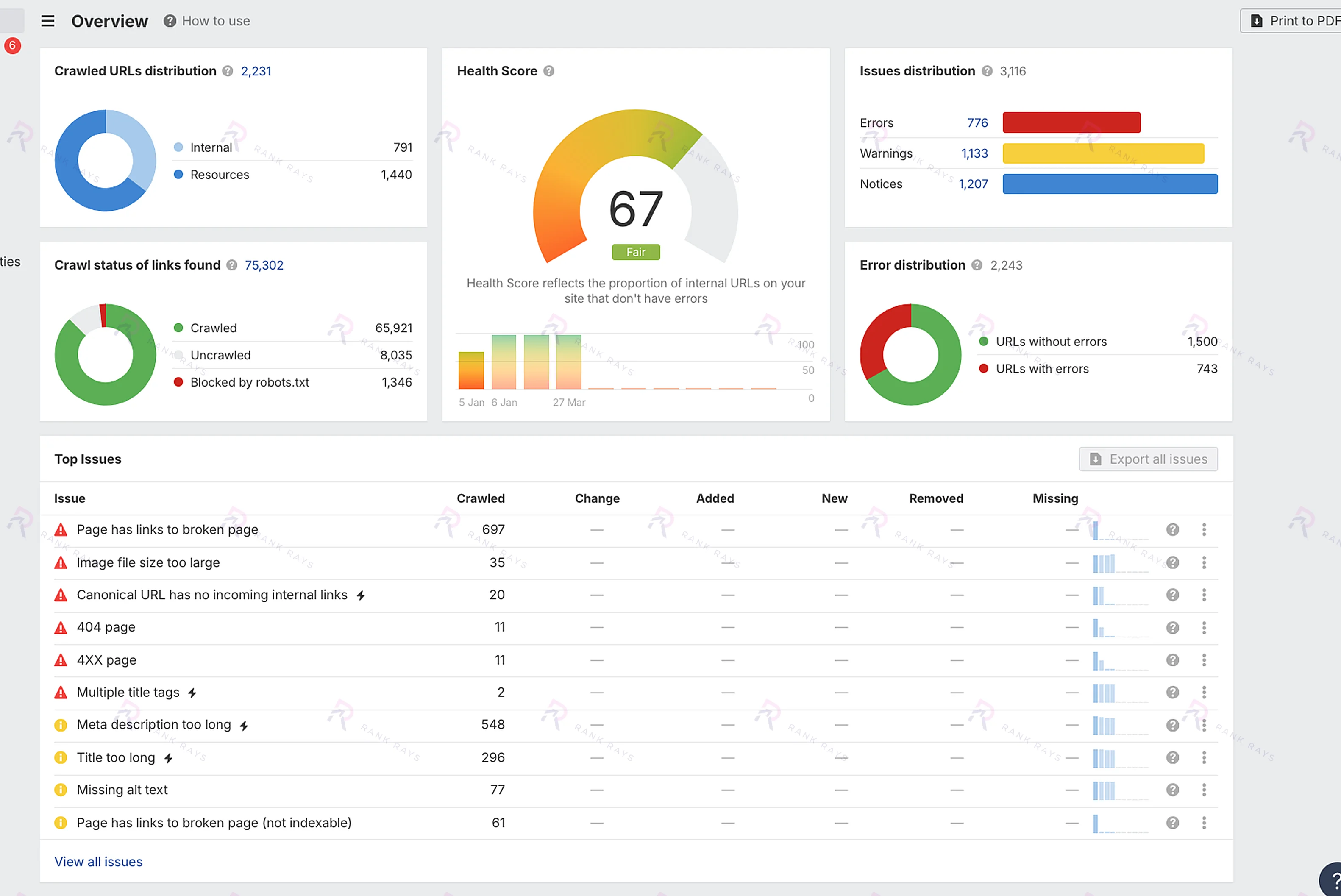
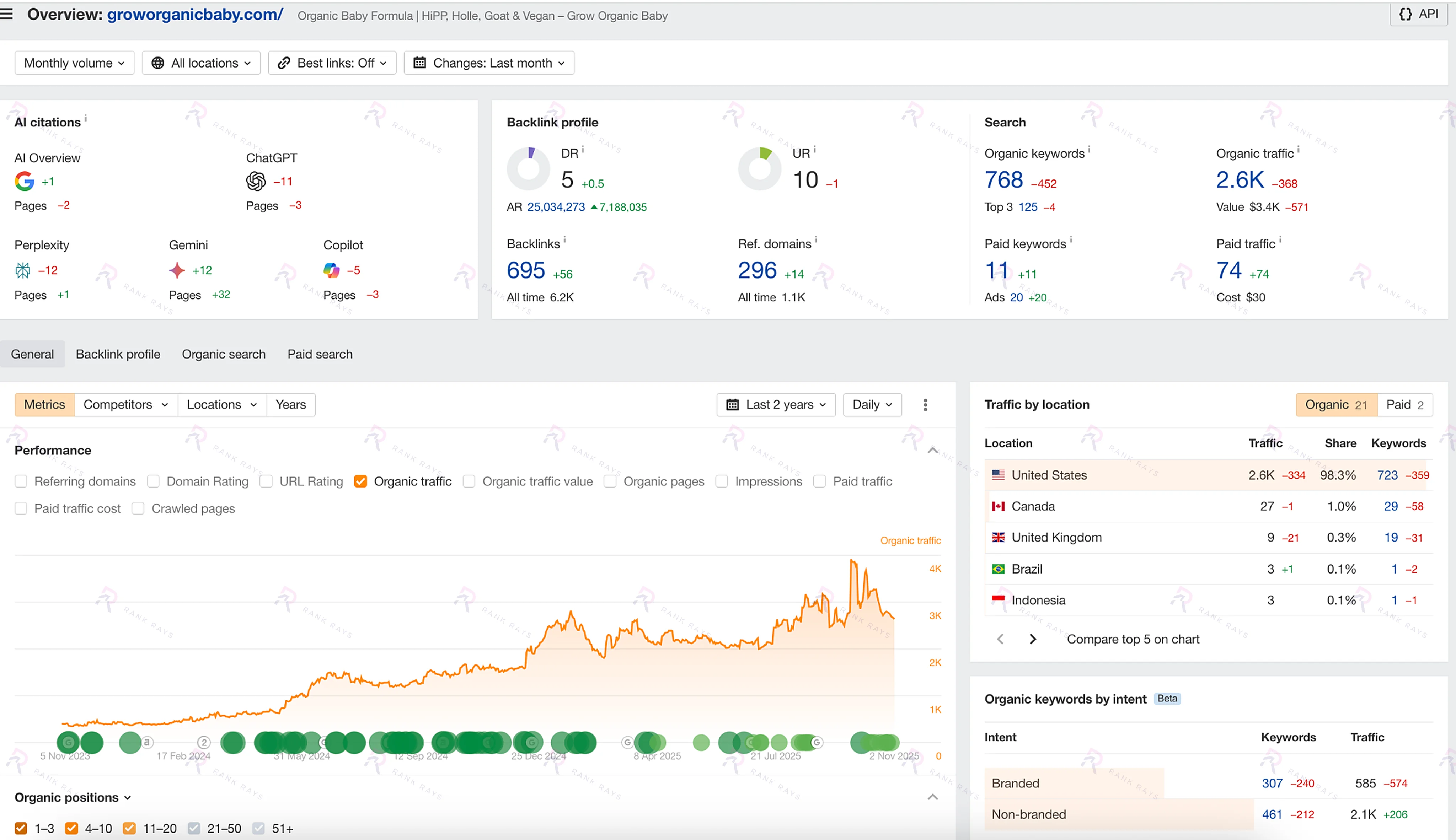
So before a single link was built, we ran a full audit (Ahrefs + Google Search Console, with domain-level GSC access and a video consultation to walk through the findings). What it uncovered changed the shape of the project: DR 5 with almost no domain authority to build on; toxic, spammy backlinks, a legacy of low-quality links actively holding the site back; declining keywords, with rankings slipping across the board; 404s still internally linked, dead pages being pointed to from live ones; duplicate title tags across pages; multiple or missing H1s, including the classic Shopify trap of the store's tagline set as the site-wide H1; images without alt text throughout; and weak AI search visibility, barely present in AI Overviews, ChatGPT, Gemini, Perplexity, and Copilot.
The client agreed to fix the foundation first. That decision made everything that followed work.
3. Why the audit had to come before the links
This is worth spelling out, because most agencies would have just started building links. Toxic backlinks do not sit neutrally, they dilute the trust signals around a domain. Google's disavow tool exists for exactly this situation, but it only helps if someone actually audits the profile, identifies the poison, and files the disavow.
Similarly, internal links pointing at 404s tell Google the site is poorly maintained, and duplicate titles plus broken heading structure make it harder for Google to understand what each page should rank for. Links amplify whatever they point at: point them at a clean, well-structured site and they compound; point them at this mess and much of their value leaks away. Cleanup first, links second, in that order, always.
4. The cleanup: disavow, then repair
The remediation ran in two phases. Phase 1, stop the bleeding: we exported the toxic backlinks from Ahrefs, reviewed them, and filed a disavow file through Google's Disavow Tool, cutting the spammy legacy links off from dragging the domain down further.
Phase 2, repair the site. Working from the audit: broken pages fixed and redirect chains cleaned up; internal links repaired so no live page points at a 404; H1s corrected to one clear H1 per page, with the Shopify tagline removed as the site-wide H1; collection and product meta titles and descriptions rewritten with no more duplicates; and image alt text added across the catalog.
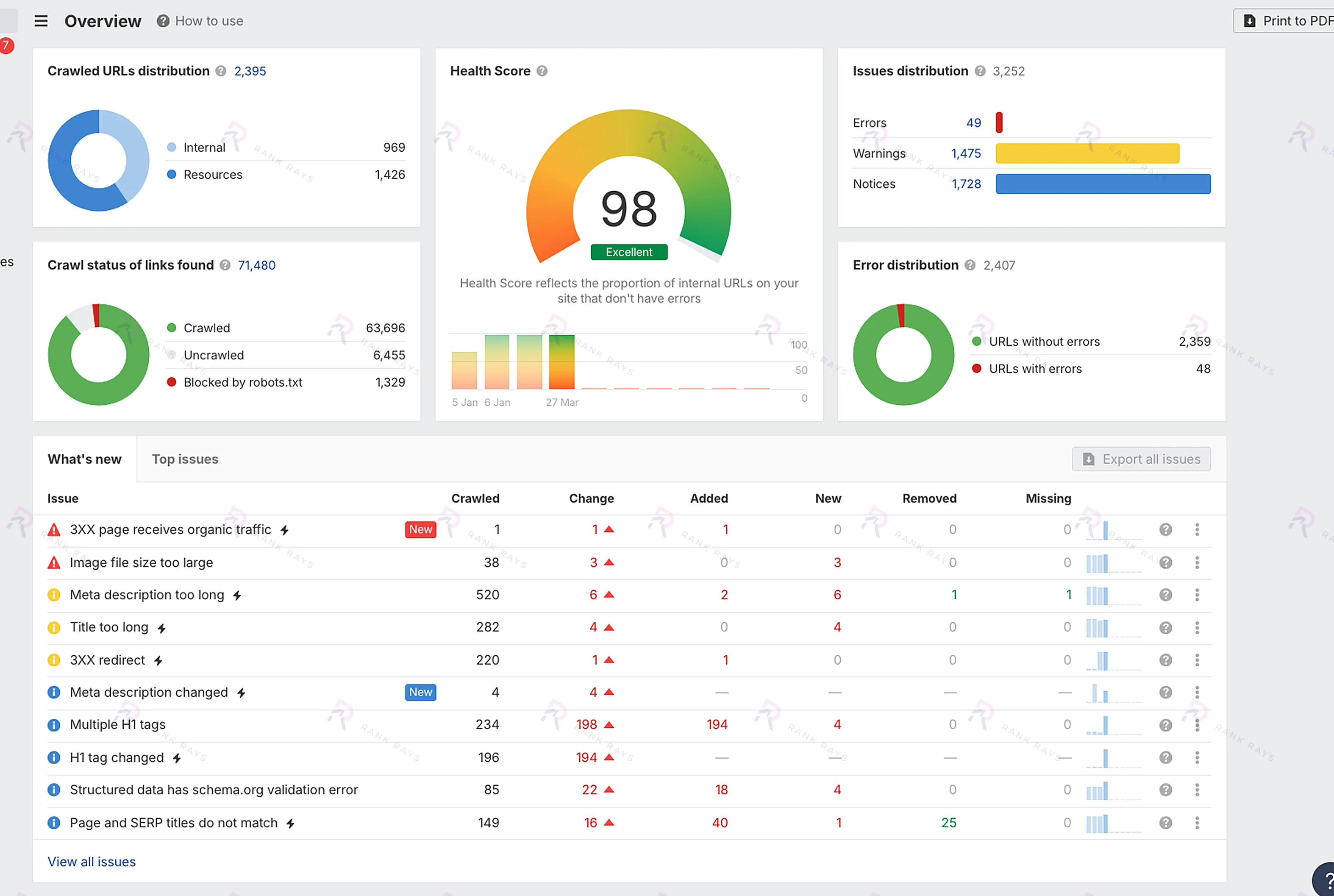
The result of the cleanup alone: the site's Health Score rose from 67 to 98, a measure of how technically sound the site is, which meant every link built afterward would land on a foundation that could actually convert it into rankings.
5. The link building: niche-relevant, layered, manual
With the foundation repaired, the original assignment began, link building, done the way it holds up over time. Foundational links (blog comments, forums, profiles, and Q&A placements on relevant sites) built a natural-looking base; editorial links (guest posts on niche-relevant websites, pitched and placed manually) added authority on top.
Niche relevance ran throughout: every target was in the store's world or adjacent to it. A baby-formula store does not need random links; it needs links from places parents actually read. No link farms, no PBNs, no automated blasts, the same manual standard behind all our link building.
6. The results
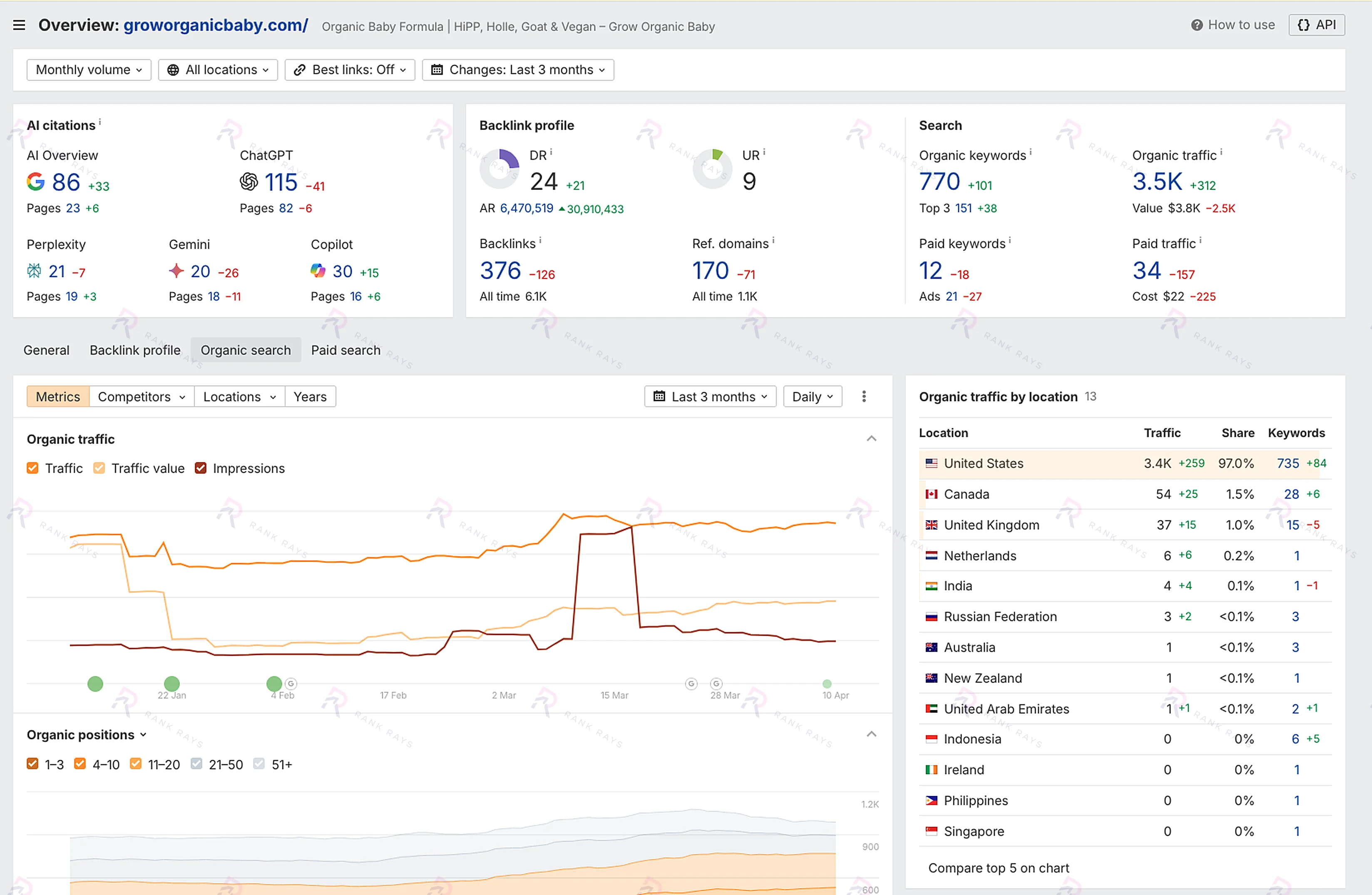
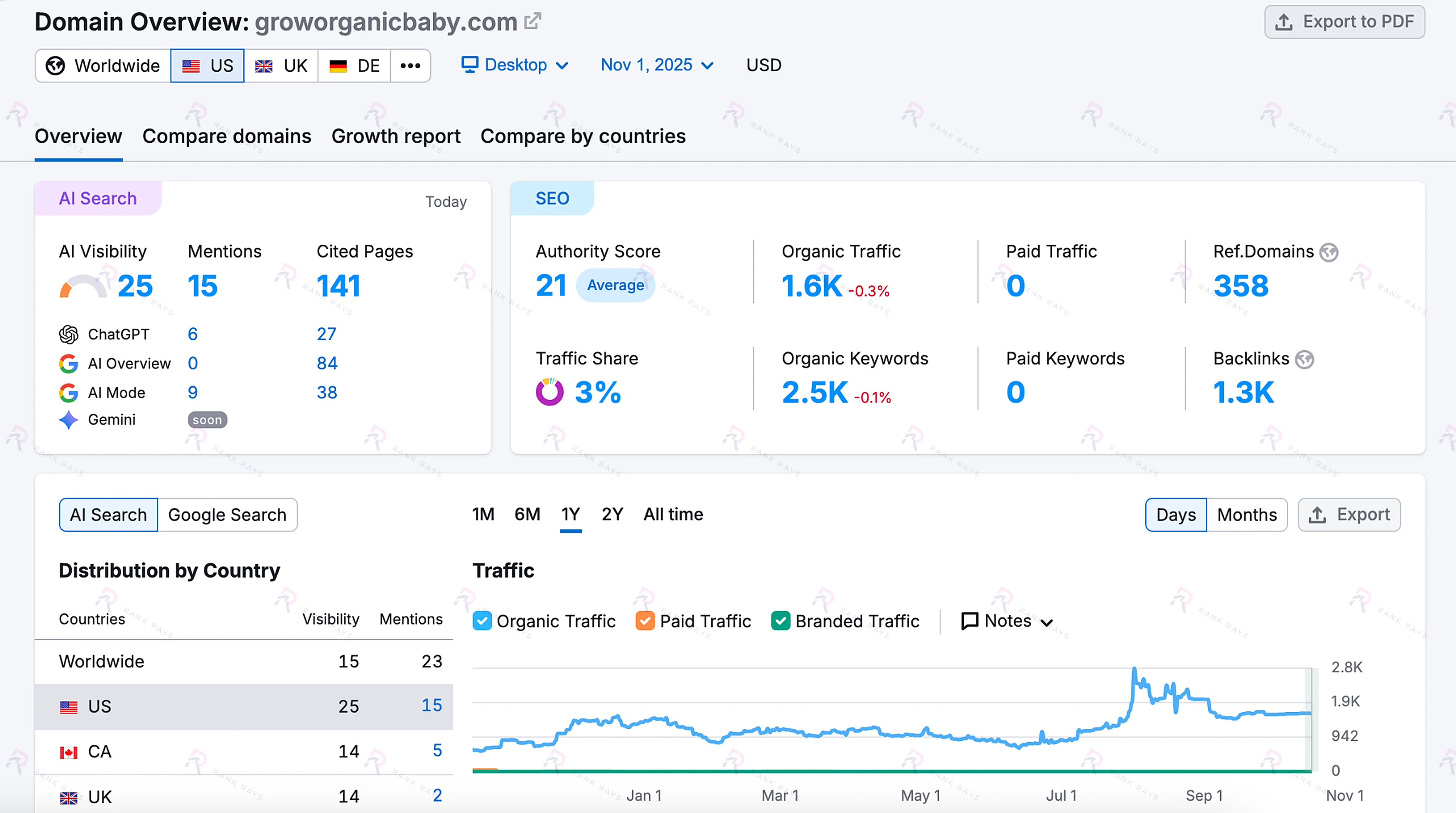
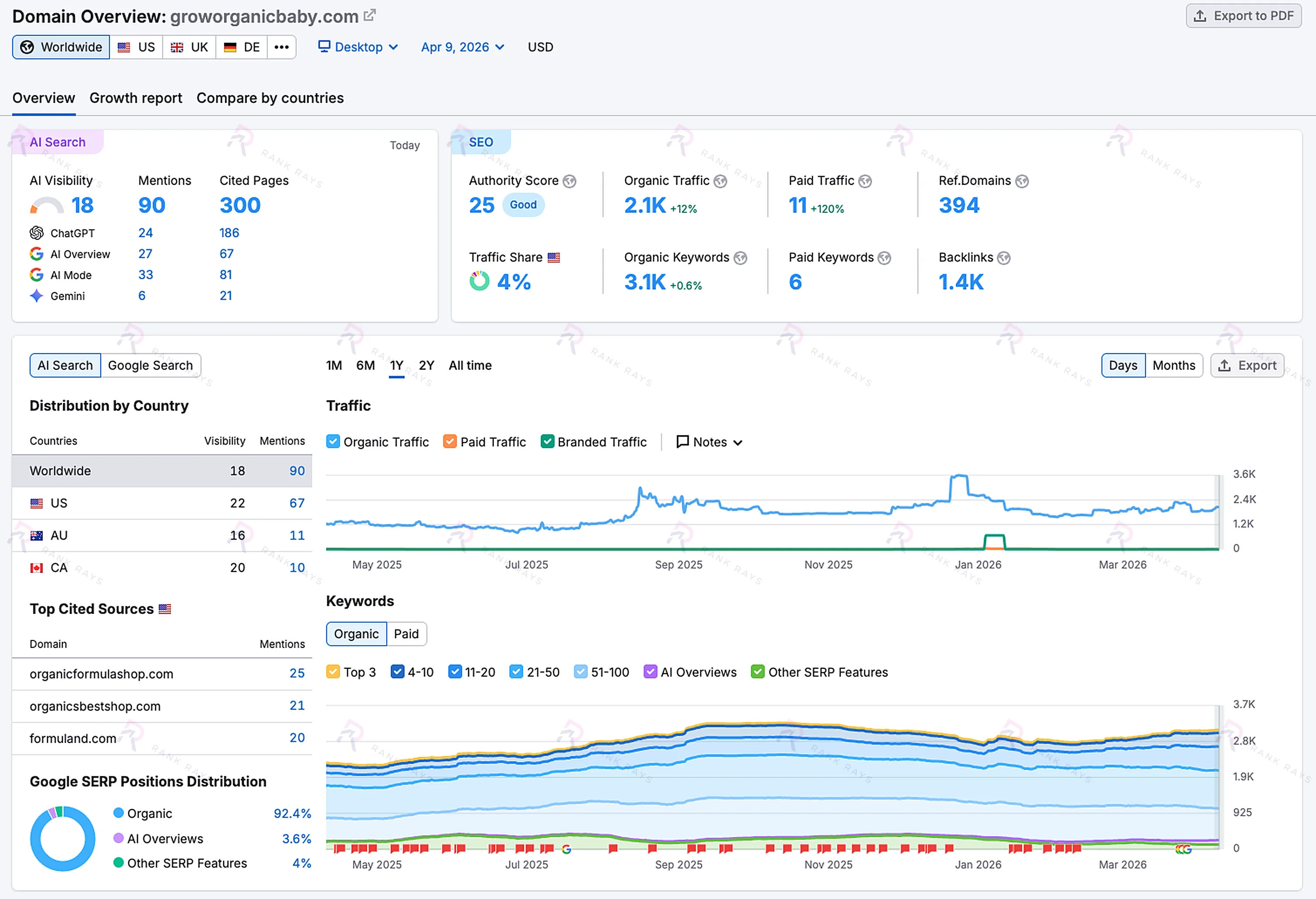
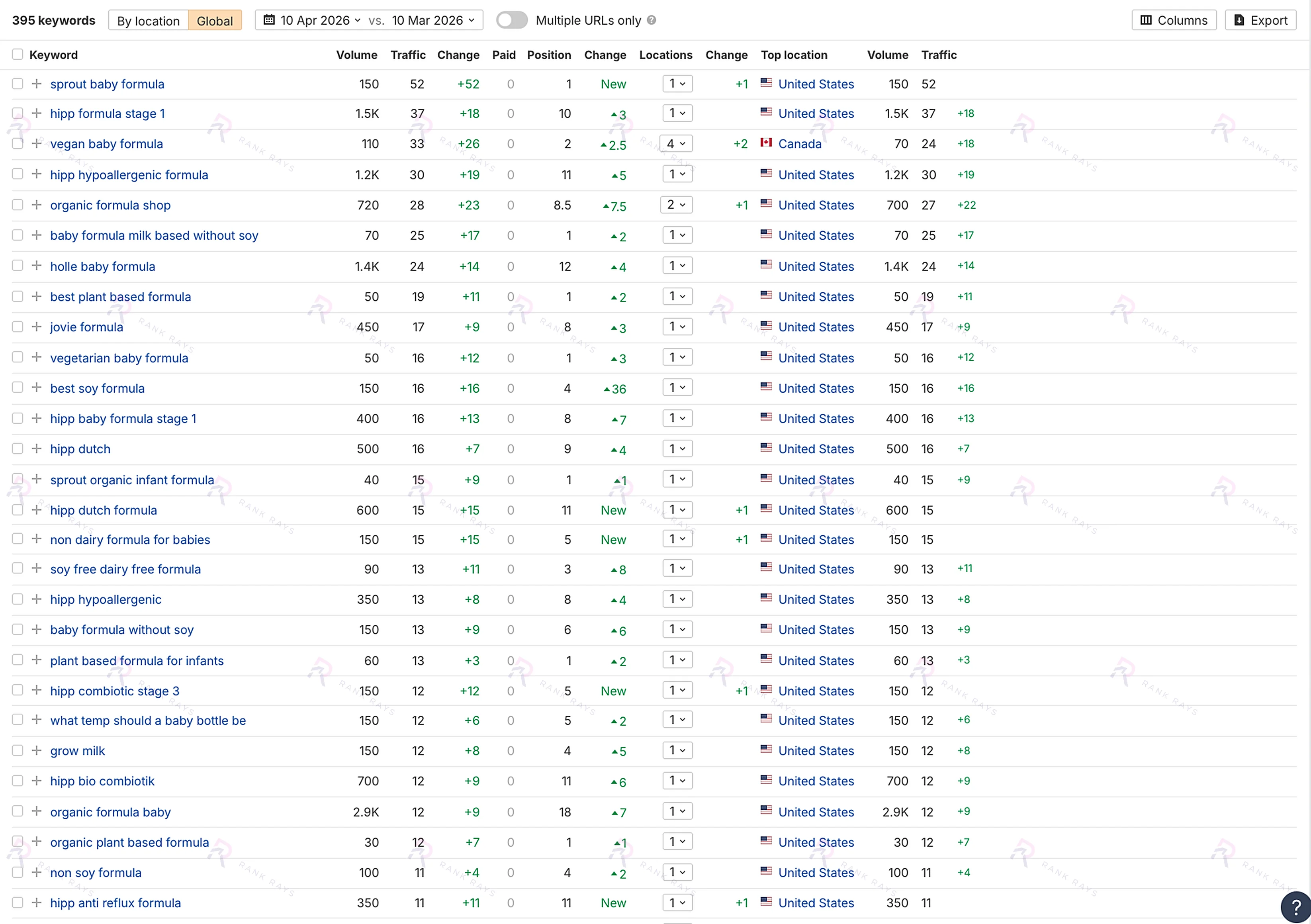
Four months after starting, measured across both major SEO platforms: DR 5 → 24; Semrush organic traffic 1.6K → 2.1K; Ahrefs organic traffic 2.8K → 3.5K; Health Score 67 → 98; spam backlinks decreasing as the disavow did its job over time; and AI search visibility regained, with the store showing up again in AI Overviews, ChatGPT, Gemini, Perplexity, and Copilot.
Two independent tools agreeing on the traffic direction is the signal that matters. This was not a reporting quirk, it was real, broad-based growth.
7. In the client's words
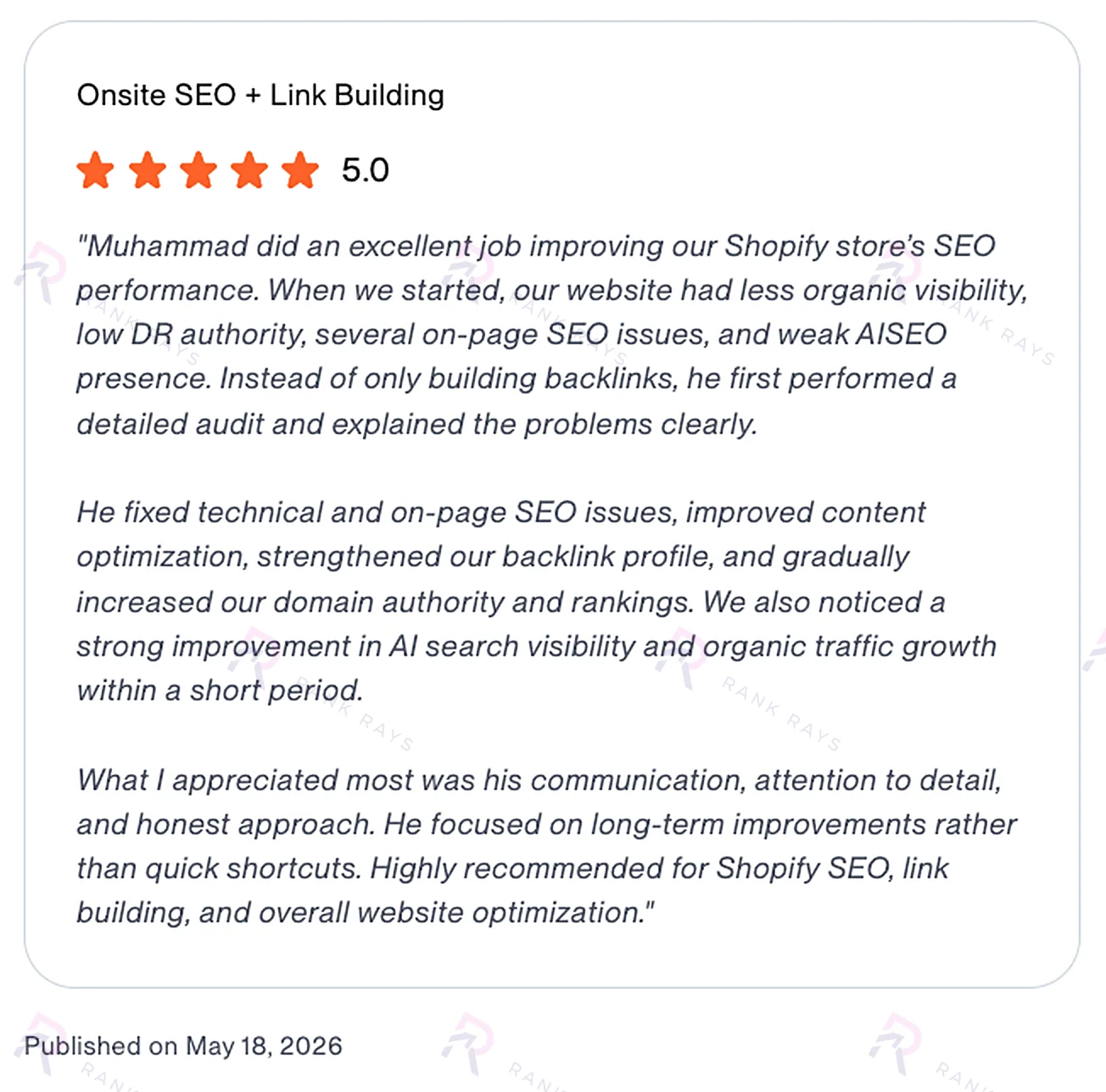
The client left this review (5.0, “Onsite SEO + Link Building”, published May 18, 2026): “Muhammad did an excellent job improving our Shopify store's SEO performance. When we started, our website had less organic visibility, low DR authority, several on-page SEO issues, and weak AISEO presence. Instead of only building backlinks, he first performed a detailed audit and explained the problems clearly. He fixed technical and on-page SEO issues, improved content optimization, strengthened our backlink profile, and gradually increased our domain authority and rankings. We also noticed a strong improvement in AI search visibility and organic traffic growth within a short period. What I appreciated most was his communication, attention to detail, and honest approach. He focused on long-term improvements rather than quick shortcuts. Highly recommended for Shopify SEO, link building, and overall website optimization.”
8. The takeaway
This case study is really about sequencing. The client asked for links; the audit said the site was not ready for links; the honest move was to say so, fix the foundation, and then build. DR 5 → 24 in 4 months happened because the cleanup came first, disavow the toxic links, repair the technical damage, and only then amplify with new ones.
It is also a reminder that modern SEO does not end at Google's ten blue links. AI search visibility, Overviews, ChatGPT, Gemini, Perplexity, Copilot, is where a growing share of product research now happens, and it responds to the same fundamentals: a clean site, real authority, and content worth citing.
“Muhammad did an excellent job improving our Shopify store's SEO performance. When we started, our website had less organic visibility, low DR authority, several on-page SEO issues, and weak AISEO presence. Instead of only building backlinks, he first performed a detailed audit and explained the problems clearly. He fixed technical and on-page SEO issues, improved content optimization, strengthened our backlink profile, and gradually increased our domain authority and rankings. We also noticed a strong improvement in AI search visibility and organic traffic growth within a short period. What I appreciated most was his communication, attention to detail, and honest approach. He focused on long-term improvements rather than quick shortcuts. Highly recommended for Shopify SEO, link building, and overall website optimization.”