Link building
The full link building strategy, from foundational base to editorial placements, coordinated as one campaign.
Learn more
Foundational Backlink Services
Every legitimate website on the internet has a layer of simple, natural links underneath it: profiles, directories, forum mentions, blog comments, free publishing platforms. Search engines expect to see them. A link profile that jumps straight to high-authority editorial links, with none of this base, looks manufactured. We build that base by hand, one real placement at a time. Start with a free SEO audit and see what your site's foundation is missing.
The base layer
Let's be direct: foundational backlinks will not rank your site on their own. No profile link, directory listing, or forum mention ever moved a competitive keyword by itself. Anyone who sells them as a ranking tactic is not being straight with you.
What they do is something quieter and just as important. They give your site the natural link base that every real business accumulates: profiles on platforms you use, listings in directories, mentions in communities where your industry talks. When Google looks at a backlink profile, it expects to see this layer. A site with 50 editorial links and zero foundational links looks like a site that bought its profile. A site with both looks like a business.
That is the job of foundational link building: making your profile look like what it is, a real site, run by real people, present in real places online.
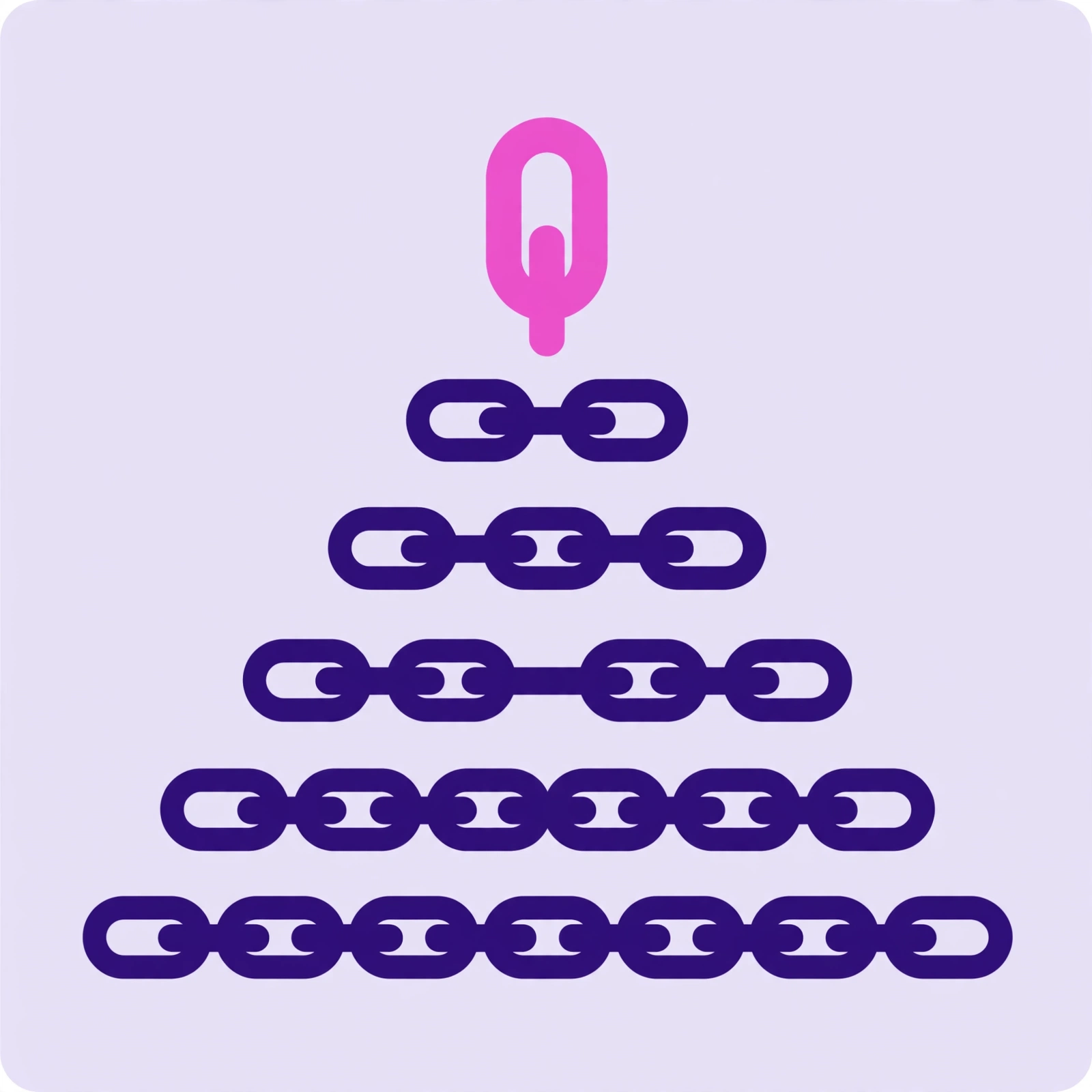
One hundred links from 100 different domains look far more natural than 100 links from 10. Foundational work spreads your footprint across many independent platforms, which is exactly the pattern search engines associate with genuine sites.
Real profiles are dominated by branded anchors and plain URLs. Foundational placements give you dozens of natural, branded, and generic anchors, so your occasional exact-match editorial links sit inside a believable mix instead of standing out.
A profile that is 100% dofollow is a red flag. Most foundational links are nofollow, and that is fine. Google has said for years that it uses nofollow links as hints, and a healthy profile carries plenty of them.
Profiles and listings tie your brand name, site, and description together across the web. That consistency helps search engines understand who you are, which supports everything else you do in SEO.
Run any established competitor through Ahrefs or Semrush and you will find this base: profiles, directories, old forum posts, document shares. Skipping it while chasing only editorial links leaves your profile visibly thinner than the sites you are trying to outrank.

Category 1 of 7
What it is: Links on the profiles your brand holds across the web: social networks, author bios, portfolio sites, professional communities, and anywhere else a legitimate business keeps a presence with a website field.
Why it matters: Branded profile links are the most natural links on the internet. Every real company has them, and they anchor your profile with brand-name anchors and consistent business information. A backlink profile with no profile links is missing the single most common link type real sites earn.
How we do it by hand: We complete each profile properly, with a real description, correct business details, and consistent branding, on platforms where a business like yours would genuinely have a presence. No auto-generated profiles on junk networks, no empty shells with a link and nothing else. If a profile would embarrass you if a customer saw it, it does not get built.

Category 2 of 7
What it is: Listings on general and niche web directories that accept site submissions: organized collections of websites, sorted by category, maintained by human editors.
Why it matters: Directories are one of the oldest link types on the web, and that is the point. A natural profile includes links from the web's basic infrastructure. Each listing adds another independent referring domain, filed under a category that describes your business, which reinforces topical relevance at the domain level.
How we do it by hand: We submit to directories with actual editorial standards and real categories, and we place each listing in the most specific relevant category, never a catch-all. Spam directories, auto-approve farms, and anything that exists only to sell listings get skipped. Note: this is about referring-domain diversity for organic search, not NAP consistency. If local listings are what you need, our local SEO work covers that separately.

Category 3 of 7
What it is: Entries in B2B catalogs, supplier directories, trade listings, and industry-specific databases: the places where companies in a sector list themselves to be found by partners and buyers.
Why it matters: A catalog listing surrounds your link with business context: your company description, your category, your industry. That context is exactly what separates a natural business listing from a random link. For B2B and service businesses, these are among the most believable foundational links you can hold.
How we do it by hand: We write real business descriptions, select the correct industry categories, and submit complete, accurate company information to catalogs that genuinely serve your sector. A half-filled listing on an irrelevant catalog helps nobody, so each submission is treated like a real business registration.
Category 4 of 7
What it is: Thoughtful comments left on real blog posts in your niche, with your name linking back to your site where the platform allows it.
Why it matters: Comment links are almost always nofollow, which is precisely their value: they feed the natural nofollow portion of your profile. Beyond the link, a good comment puts your brand in front of the blog's readers and the site owner. Some of our clients' longest-running referral trickles started as a comment on the right post.
How we do it by hand: We read the post first, then write a comment that adds something: a counterpoint, a real example, a question the article raised. Generic praise like “nice post” is spam and we do not post it. The comment has to be worth publishing even if the link were removed.

Category 5 of 7
What it is: Participation in genuine online forums and Q&A communities where your industry asks and answers questions: niche forums, plus large platforms like Reddit and Quora where real discussions happen daily.
Why it matters: Forum links come wrapped in topical conversation, which gives them relevance few other foundational links can match. They also drive the most referral traffic of any foundational category, because they sit where people are actively looking for answers.
How we do it by hand: We join the conversation before we link anything: answering questions, sharing experience, becoming a recognizable participant. Links go in profile fields, signatures where allowed, or inside answers where they genuinely help the person asking. Drive-by link drops get deleted by moderators and damage the brand, so we never do them.

Category 6 of 7
What it is: Articles and pages published on free publishing platforms, the well-known blog and content networks like WordPress.com, Blogger, Medium, and Tumblr, where anyone can publish under their own account.
Why it matters: These platforms let you publish topical content that links to your site in context. A short, focused article about a problem your product solves, with a natural link to your page, is a legitimate citation. It also gives you branded properties that can rank for long-tail queries on their own.
How we do it by hand: We write actual articles with substance: proper structure, real information, relevant images, natural internal and external links. One-paragraph stubs exist only to hold a link, and platforms delete them. Each property is treated like a small publication that has to stand on its own.

Category 7 of 7
What it is: Documents uploaded to document-sharing platforms, the well-known networks like SlideShare and Scribd, where presentations and PDFs are published and indexed so people can discover them.
Why it matters: Documents get indexed as their own pages, which means your content reaches people through a format competitors often ignore. Each upload carries a profile link and a description link, adding two more referring points from an established domain, in a content type that diversifies your profile beyond plain web pages.
How we do it by hand: We create documents worth opening: checklists, short guides, data summaries, branded and complete with real descriptions and tags. A 2-page filler PDF fools nobody and gets no views. The document has to be useful enough that someone would share it.
Get started
Foundational link building is slow, manual work, and that is exactly why most agencies skip it or automate it. We do it by hand: real profiles, real comments, real documents, every placement reported with its live URL. Tell us about your site and we will scope the foundation it needs.
How we keep it clean
Foundational backlinks have a bad reputation because most providers build them badly: bots, spun content, thousands of links overnight. Every placement we build follows these rules, no exceptions:

Every placement lands on a platform, in a community, or under a category connected to your niche. A link surrounded by relevant context is a citation. A link on a random page is litter.
No bots, no submission software, no spun descriptions. A person writes every profile, every comment, every document. Automation is what turned this tactic into spam, and we want no part of it.
Branded anchors and plain URLs dominate, with generic phrases mixed in. Exact-match commercial anchors stay rare. The anchor distribution of a real business is boring, and boring is the goal.
We never chase dofollow on platforms that default to nofollow, and we never mislabel a link's attribute in your report. A natural profile carries a heavy nofollow share, and pretending otherwise is how providers get caught.
Your report lists every placement with its live URL, anchor text, platform, and date. Open each one and check it. If a placement ever disappears or looks wrong, you will see it in the report, not hidden from it.
Why Rank Rays
Most agencies treat foundational links as filler to pad a report. We treat them as the base everything else stands on, and we build them with the same care as our outreach placements. A few facts about who you would be working with:
Founder-led experience: Muhammad Shakeel has done SEO since 2013, with 2200+ websites worked on and 95% client satisfaction. Foundational link building is where his career started, back when blog comments and forums were the whole game.
A 10+ member specialist team: researchers find the right platforms and communities, writers create the profiles, comments, and documents, and every placement is checked before it reaches your report.
Manual, always: no automation, no spun content, no bulk submissions. If a placement cannot be done by hand to a standard we would show a client, it does not get done.
Straightforward pricing: foundational work runs at $20/hour, or inside monthly packages, Silver $800, Gold $1,500, Diamond $2,500. Based in Lahore, Pakistan, with a UK office, serving clients worldwide.
Honest guidance
Editorial links get the attention, but the base layer is what makes them believable. If your profile is missing profiles, directories, and community links, start there. Request a quote and we will tell you honestly what your foundation needs.
Keep exploring
Foundational backlinks are the base layer. These related services build the editorial links that sit on top of it, each earned through manual outreach.
The full link building strategy, from foundational base to editorial placements, coordinated as one campaign.
Learn moreOriginal articles on real blogs with contextual links inside, the core editorial tactic that a strong foundation supports.
Learn moreContextual links placed inside existing, indexed articles through personal outreach to editors.
Learn moreWhat separates a genuinely earned editorial link from a low-quality one, and how the foundation makes editorial links believable.
Learn moreWhy links surrounded by relevant article content carry more weight than profile or directory links.
Learn moreGetting your best content listed on curated resource pages in your niche through personal outreach.
Learn moreStraight answers to the questions clients ask before starting foundational link building with us.
Case studies
A few projects we're allowed to talk about, the problem, what we did, and what changed. Client names stay private; the numbers don't.

Muhammad Shakeel, Founder, Rank Rays. SEO since 2013, 2200+ websites worked on, 95% client satisfaction. Foundational backlinks won't rank you alone, and we'll tell you that upfront. Built by hand on real platforms, reported link by link, so your profile looks like a real business from day one.