
By Muhammad Shakeel · Oct 23, 2026 · 14 min read
Traffic dropped after a Google update? Date the drop, read the metric pattern, and follow the 7-step recovery playbook I use on client sites every week.
Summary: Traffic fell after a Google update? Don't panic and don't rewrite everything. Date the drop, read the metric pattern, and follow a recovery sequence that takes months, not miracles.
The moment every site owner dreads
You open Search Console on a normal morning and the clicks graph has fallen off a cliff. Nobody changed anything. The site was fine last week. The question in your head is simple: did Google do this?
This post is the exact sequence I follow on client sites when traffic drops after an update. It is the order of operations I use in practice: date the drop, rule out the manual action, read the metric pattern, wait, audit honestly, fix in the right order, and set honest expectations. Follow it in this order and you avoid the two things that cause the most damage after an update: panicking and changing everything at once.
Step 1: Date the Drop Against the Dashboard
The first move is always the same: line up the date your traffic fell against Google's Search Status Dashboard. Not a forum thread. The dashboard lists every confirmed update with start and end dates, and it is the only source that separates a real update from noise.
Here is the 2026 calendar as of today, 2026-10-23, from the dashboard:
- Feb 5–27, 2026: Discover core update. Discover feed only, starting with English-language users in the US. It did not affect regular search results, so a search-traffic drop in February was not this.
- Mar 24–25, 2026: Spam update. Finished in 19 hours 30 minutes, the fastest confirmed rollout in the dashboard's history.
- Mar 27 – Apr 8, 2026: Core update. Ran 12 days 4 hours. Google described it as "a regular update designed to better surface relevant, satisfying content."
- May 21 – Jun 2, 2026: Core update. Ran 11 days 21 hours. This is the last confirmed core update on the dashboard.
- Jun 24–26, 2026: Spam update. Ran 2 days 1 hour.
- Aug 18–21, 2026: Spam update. Ran 2 days 16 hours. Note there was no August core update.
- Sep 24 – Oct 8, 2026: Spam update. Ran 13 days 16 hours, and Google said it "applies globally and to all languages." This is the most recent confirmed update.
Now here is what matters today. The dashboard lists no confirmed October 2026 update. The September spam update finished on Oct 8, and that is the latest confirmed event. The last confirmed core update was May 2026. There is chatter in forums about rankings moving in October, and that chatter is unconfirmed. Do not act on rumors. If your drop lines up with Sep 24 – Oct 8, you are likely looking at the spam update's aftershock. If your drop lines up with nothing on the dashboard, that does not rule out an update: Google ships smaller core updates it never announces, so traffic can move in a month with a clean dashboard.
Date the drop first. Everything downstream depends on this step. A drop that started Sep 26 and a drop that started Oct 15 are two different diagnoses, even when the graphs look identical.
Step 2: Rule Out the Manual Action
This takes 30 seconds and it changes everything. Open Search Console and check the Manual Actions report. A green check means no manual action, and that is the normal state.
Why this matters: a core update is not a penalty. Google says so directly in its core-updates documentation. A core update does not target specific sites or pages; it reassesses how all content stacks up against the new quality bar. A manual action is the separate, explicit penalty, and it always appears in the Manual Actions report. No notice means the drop is algorithmic, and the recovery path is different.
If there IS a manual action, pause this playbook. You have a penalty with a named cause: fix exactly what Google cited and request reconsideration. Most drops I investigate have no manual action. They are algorithmic, which means the content was reassessed, not punished.
Step 3: Read the Metric Pattern: the Two-Drop Diagnostic
This is the step most people skip, and it is the single most useful diagnostic in this post. Before you touch a page, compare position, impressions, clicks, and CTR in Search Console for the affected period. The pattern tells you which of two different problems you have.
Pattern A: the core-update drop. Average position falls. Impressions fall. Clicks fall roughly in proportion. CTR stays about the same. The meaning: Google reassessed your content against competitors and moved it down. The fix is the content-quality audit in steps 5 and 6.
Pattern B: the AI Overview squeeze. Position stays stable or even improves. Impressions stay stable or rise. Clicks fall disproportionately. CTR drops sharply. The meaning: Google's AI answer is absorbing the click before it reaches your page. You did not lose the ranking; you lost the click. The fix is structural: become the source the AI answer cites, rather than a page sitting underneath it.
Getting this wrong costs months. Rewriting good content never fixes an AI Overview problem, and chasing AI citations never fixes a content-quality problem. Read the pattern first; it decides the fix.
One more cut of the data while you are here. Google's procedure says to analyze web search, images, video, and news separately, because a drop can sit in only one of them. Check each search type before you conclude anything.
Step 4: Wait One Full Week Before Touching Anything
This is the hardest step to sell and the easiest to get right. Once the update has finished rolling out, wait at least one full week before making changes. Google's own procedure says this: rankings are still settling during the rollout, and acting on mid-rollout data means acting on numbers that are still moving.
I know how this feels. A client watches revenue dip and wants something done today. But editing pages during the settling period does two kinds of damage. You cannot measure what worked, because the baseline was still shifting. And frantic changes to performing pages can break what the update was rewarding. Google's documentation is explicit: do not change content that is already performing well.
The wait has a practical shape. Compare the full week after completion against the full week before the update started, broken down by pages and by queries. That is the comparison Google recommends. A single bad day is noise.
Use the waiting week for the investigation in Step 5. Pull your worst-affected pages and queries, note which competitors moved up in their place, and gather the evidence. The week is the investigation period.
Step 5: Run the Honest Content Audit
If the drop survived the waiting week, it is time for the audit. Take your most-affected pages and run each one through Google's self-assessment questions, the helpful-content set Google publishes for exactly this situation. Then compare each page, honestly, against the pages that now outrank it.
The question that matters most is the "why" question: was this content created primarily to help people, or primarily to rank? Every other question is a detail of that one. Does the page show genuine experience with the subject? Does it leave the reader with something they could not get from the top 3 results? Would you show it to a customer who asked you this question in person?
Judge the size of the fall while you audit. Google's own examples draw the line clearly. A small fall, say position 2 to position 4, does not call for drastic action; leave performing content alone. A large fall, say position 4 to position 29, calls for a deeper assessment. The audit is not about finding something wrong with every page. It is about finding which pages genuinely fail the self-assessment and which ones just got reshuffled.
Score the audit against the pages outranking you. Pull up the pages that took your positions and read them like a customer, not like the owner. If they are more detailed, more current, or written from clearer experience, that is your answer. The recovery is not a trick; it is closing the gap between your page and those pages.
Step 6: Fix in the Right Order: Rewrite, Merge, or Remove
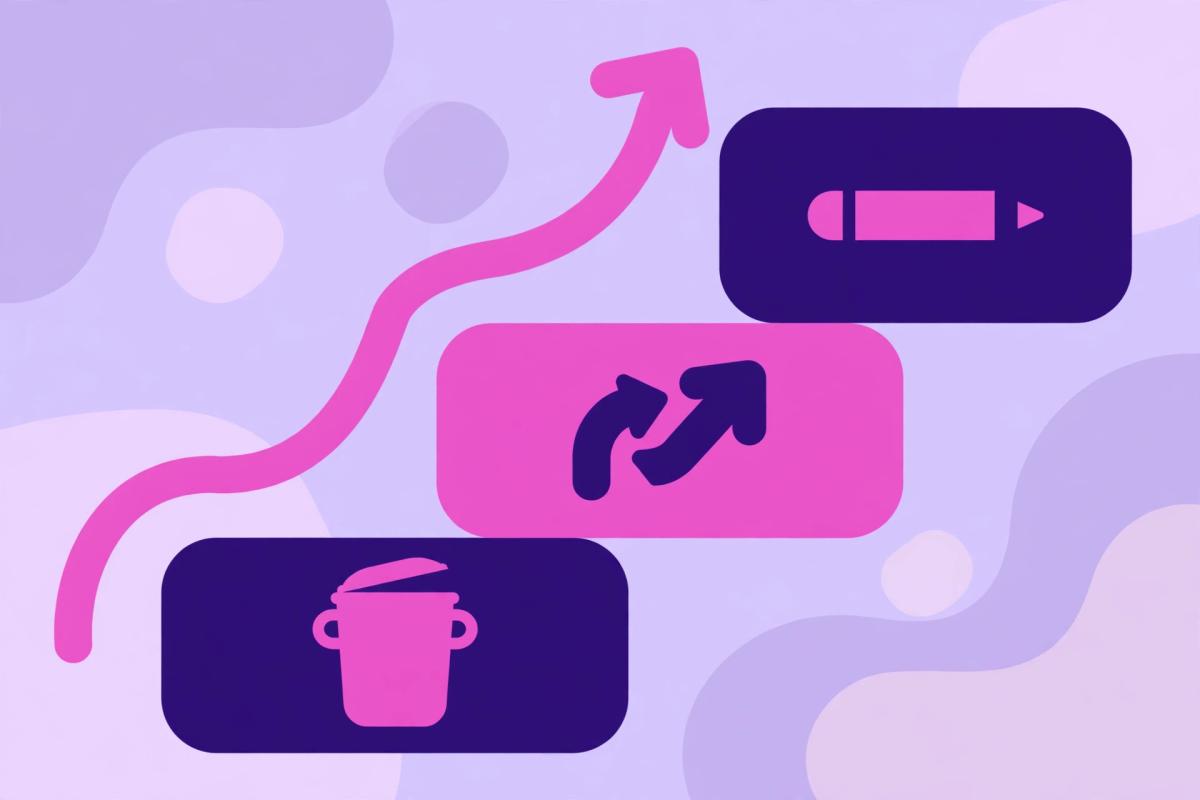
The audit gives you a list of pages and a verdict on each. The fix order is not optional; doing these in the wrong order is how sites lose equity they never get back.
Start with rewrites. Pages that fail some self-assessment questions but have a real topic behind them get rewritten. This is the most common outcome. Keep the URL and the ranking history, and rebuild the page so it answers the audit: add the missing experience, cut the filler, update the facts. Rewrites are where most recoveries are actually built.
Then merge the thin ones. Pages that are thin or overlapping, splitting one topic across several weak URLs, get merged. Pick the strongest URL, fold the best material from the weaker pages into it, and redirect the losers to the winner. One comprehensive page beats five fragments.
Remove only as a last resort. Deleting a page is not a tactic. Google is blunt about this: wanting to delete whole sections usually means those sections were built for search engines, not readers. Removal is only for pages with no reader value and no links worth keeping. When you do remove, redirect to the closest relevant page so the link equity does not evaporate. Never mass-delete dropped pages in a panic.
Step 7: Set Honest Expectations
Here is the honest version of recovery timing, straight from Google's documentation. Some changes take effect within days. But it can take several months for Google's systems to confirm that a site is producing helpful content over the long term. Months, not weeks. Anyone who promises a faster timeline is selling something.
There are two pieces of good news inside that timeline. First, you do not always have to wait for the next core update to see movement. Google makes continual smaller updates that it never announces, and improvements can surface through those. Second, the work compounds: every page you genuinely improve raises the site's baseline, and the next announced update evaluates the improved site, not the old one.
And here is the line I will not soften: there is no guarantee of recovery. Not from this playbook, not from any audit, not from any agency. I report website metrics only. What you control is the quality of the work and the consistency of the effort.
Keep improving steadily after the initial fixes. The sites that recover are the ones that treated the audit as a starting point, not a one-time project. Hold new content to the same audit standard, and let the smaller updates surface the gains while you wait for the next core update to confirm them.
What Kind of Drop Is This? Compare the Patterns
Not every traffic drop is a core update. Use this table to match your Search Console pattern to the cause before you pick a fix. Every claim below comes from the diagnostic facts in this post.
| Drop type | What moves in Search Console | Does Google notify you? | Correct first move |
|---|---|---|---|
| Core update drop | Position down, impressions down, clicks down proportionally, CTR roughly flat | No | Wait 1 full week after rollout ends, then run the honest content audit |
| Spam update drop | Position down, impressions down, often sharply on pages using shortcuts | No | Check the site for shortcuts the spam update targets; the September 2026 spam update ran Sep 24 – Oct 8 |
| Manual action | Clicks and impressions down sharply, often site-wide or on cited pages | Yes, always in the Manual Actions report | Fix exactly what the notice cites, then request reconsideration |
| AI Overview squeeze | Position stable or up, impressions stable or up, clicks down disproportionately, CTR down sharply | No | Structural fix: become the cited source for the AI answer, not just a page under it |
| Technical fault | Clicks and impressions down sharply with no matching update on the dashboard | No | Date the drop against the dashboard first; if nothing matches, investigate crawling, indexing, and recent site changes |
Two notes on reading this table. The "no" in the notification column is the point: except for a manual action, Google never tells you which update hit you. The dashboard dates plus the metric pattern are your notification. And the spam-update row matters right now: the September 2026 spam update finished Oct 8, 15 days before this post. If your drop started in that window and your site used shortcuts, start there.
4 Recovery Myths That Waste Your Time
Myth 1: Technical quick fixes will recover a content drop. Changing title tags or restructuring URLs cannot recover a content-quality drop. Neither can a faster Core Web Vitals score. These fixes are worth doing on their own merits. But they do not address what a core update recalibrates: content quality against competitors.
Myth 2: Delete the pages that lost traffic. Deleting dropped pages is a last resort, not a tactic. Google says that wanting to delete whole sections usually means those sections were built for search engines, not readers. Mass deletion after a drop destroys link equity and ranking history while leaving the underlying quality problem untouched. Rewrite or merge first. Remove only what has no reader value.
Myth 3: llms.txt will help your Google rankings. It will not. The llms.txt file does nothing for Google rankings, full stop. If someone sold you an "llms.txt optimization" as update recovery, you bought the wrong service.
Myth 4: Impressions steady but clicks fell means you lost rankings. The opposite. When impressions hold and clicks fall, your position is intact; what changed is the snippet, the title, or an AI Overview absorbing the click. That is a different diagnosis with a different fix. Treating it as a ranking drop sends you rewriting content that was never the problem.
Frequently Asked Questions
Is a Google core update a penalty?
No. A core update is not a penalty and does not target specific sites or pages. It reassesses how all content measures against the updated quality bar. The penalty is the separate manual action: explicit, and always shown in Search Console's Manual Actions report. No notice means the drop is algorithmic, not manual.
How long does it take to recover from a core update?
Months, not weeks. Google says some changes take effect within days, but it can take several months for its systems to confirm that a site is producing helpful content over the long term. Plan for a multi-month effort.
Do I have to wait for the next core update to recover?
No. Google makes continual smaller updates that it does not announce, and improvements can surface through those. The next announced core update then evaluates the improved site.
Is recovery guaranteed if I fix everything?
No, and anyone who guarantees it is not being honest. Google offers no guarantee of recovery, and neither does this playbook. What you control is the quality and consistency of the improvement work. Report website metrics, keep improving, and let the updates confirm the gains on their own schedule.
Will changing my title tags or improving Core Web Vitals recover the drop?
No. Technical quick fixes will not recover a content-quality drop. They are worth doing on their own merits, but they do not address what core updates recalibrate. If the diagnosis is a content-quality drop, the fix is the audit and the rewrite work, not the technical layer.
Should I delete pages that lost traffic after an update?
Only as a last resort. Google's position is that wanting to delete whole sections usually means those sections were built for search engines, not readers. Rewrite pages that fail parts of the audit. Merge thin, overlapping pages into one stronger page. Remove only pages with no reader value, and redirect them so the equity is not lost.
My impressions are steady but my clicks fell. Is that a ranking drop?
No. Steady impressions with falling clicks means your position is intact and something else changed: the snippet or title, or an AI Overview absorbing the click above your result. Check the pattern against the two-drop diagnostic in Step 3. This needs a snippet or structural fix, not a content rewrite.
How do I know the drop was caused by an update at all?
Date the drop against Google's Search Status Dashboard. If the drop's start lines up with a confirmed rollout, you have your likely cause. If nothing matches, remember that Google ships smaller updates it never announces, so a clean dashboard does not rule an update out. Then rule out the other causes: check the Manual Actions report and investigate technical faults before concluding it was an update.
The Bottom Line
Traffic drops after updates feel personal. They are not. Your content was reassessed against a new bar, and the recovery is the unglamorous work of closing the gap: date the drop, rule out the manual action, read the metric pattern, wait a week, audit honestly, fix in the right order, and give it months. No shortcuts recovered anyone, because shortcuts are what the spam updates punish.
If you want an expert to run this playbook on your site, get a free SEO audit quote.
Want this done for your site?
Reading helps, but rankings come from doing. Request a free SEO audit and our team will look at your actual site.